 Deutsch
  Italiano
  Français
  Español
  Svenska
 The 3 nearest Atlas therapists The 2 nearest Atlas therapists
(distances estimated using IP)

BEFORE
AFTER
Prevention is not just about avoiding illness; it also means creating the best possible conditions for the body to grow, adapt and function properly throughout the years.
The AtlantoMed method embraces this preventive approach: checking the position of the Atlas and, when necessary, correcting its misalignment means taking action before postural imbalances become established and increasingly difficult to correct.
Misalignment of the first cervical vertebra, often present since birth, negatively affects a child’s postural development. For this reason, its position should be checked as early as possible, without waiting for obvious symptoms to appear.
Childhood is a period of constant transformation. The skeleton grows, muscles develop and children gradually acquire new movement patterns: they learn to hold up their heads, sit, crawl, stand, walk and eventually perform increasingly complex and coordinated movements.
Throughout this process, the body constantly seeks its balance. If the Atlas is not correctly positioned, adaptations and compensations may develop, affecting the posture of the head, shoulders, spine and pelvis.
Initially, these adaptations may go unnoticed because a young body has a remarkable ability to compensate. The fact that a child does not experience pain does not mean that their posture is perfectly balanced.
For this very reason, prevention should begin before symptoms appear, not only when the problem has become obvious.
Atlas correction is particularly suitable for children because the muscle contractures commonly found in adults are not yet present or have not yet become chronic and deeply established.
Over the years, the body gradually becomes accustomed to a compensatory posture. Some muscles remain constantly contracted and shorten, while others, because they are insufficiently used, do not develop properly and atrophy. This imbalance can become part of a person’s habitual postural pattern.
In children, these mechanisms are not yet deeply rooted. A growing body can therefore adapt more easily to the new situation without having to counteract compensations accumulated over decades.
Taking early action means giving the body the opportunity to develop under more favorable conditions and progress harmoniously through the different stages of growth.
A child’s posture does not depend solely on how they sit at a desk or use a smartphone. It results from the interaction between the skeleton, muscles, joints, balance and daily habits.
When the head is not supported in a balanced manner because of cervical misalignment, the rest of the body inevitably tries to compensate. One shoulder may appear higher than the other, the pelvis may assume an asymmetrical position and body weight may be distributed differently between the two feet.
These adaptations do not occur because the child deliberately “sits incorrectly.” The body spontaneously adopts the position that allows it to maintain balance with the least possible effort.
Simply telling a child repeatedly to sit up straight may therefore not be enough. Before correcting posture externally, it is important to understand whether an underlying structural cause is prompting the body to adopt certain positions.
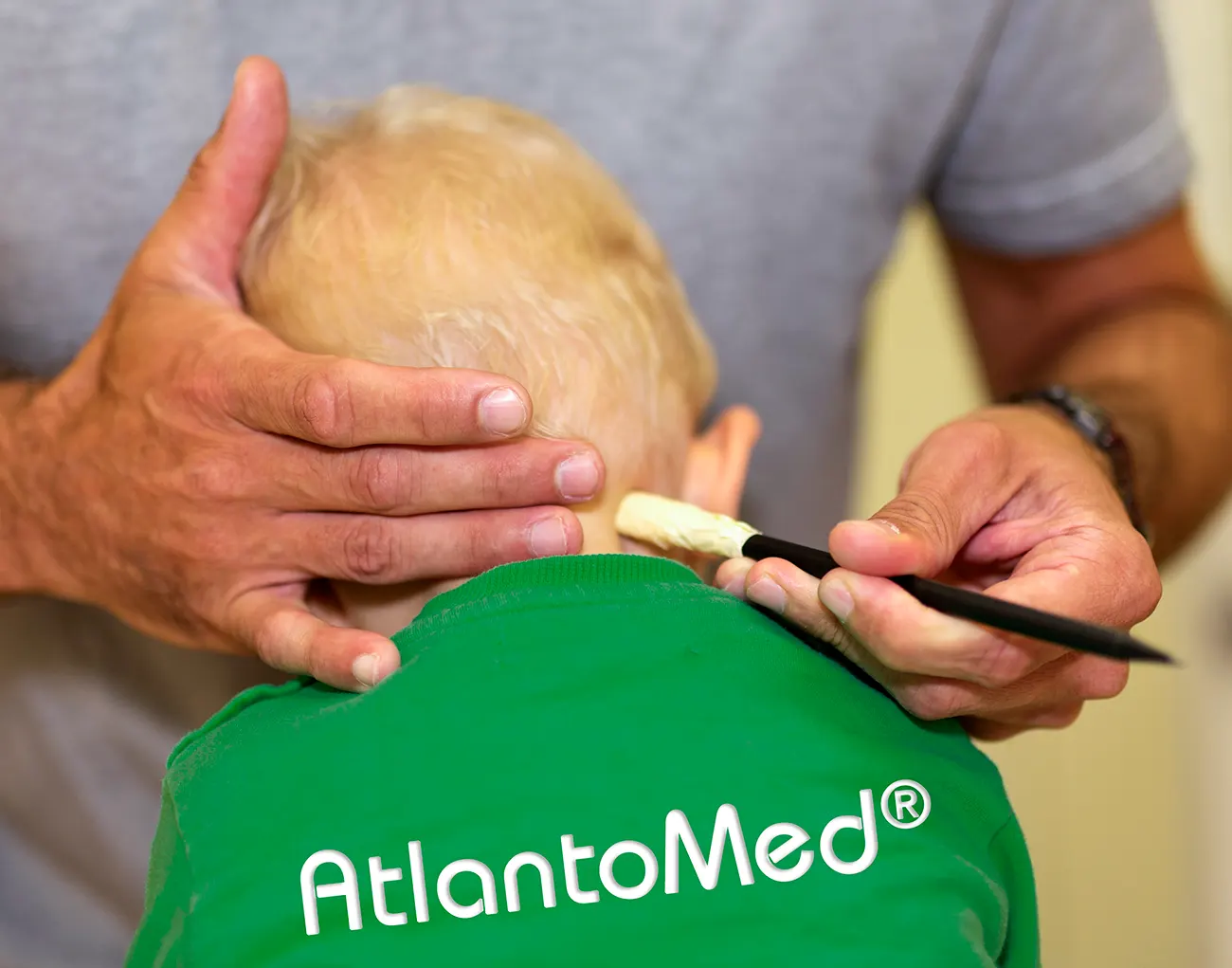
Many parents take their child to a specialist only when a specific problem appears. However, a preventive check serves a completely different purpose: it is not intended to address an existing symptom but to determine whether conditions are present that could, over time, encourage postural imbalances and compensations.
Waiting until a child experiences pain means abandoning the very principle of prevention. Pain is, in fact, one of the last signals through which the body communicates that it can no longer compensate effectively for a particular situation.
Observing posture, paying attention to asymmetries and having the position of the Atlas checked instead make it possible to act early, while the body still retains its full capacity for adaptation and self-regulation.

Most people associate health with the absence of pain. If nothing hurts, they automatically assume that everything is working properly. However, this way of thinking overlooks the body’s extraordinary ability to adapt and compensate.
A person can live with an unfavorable condition for a long time without experiencing significant symptoms. The body changes muscle tension, posture and movement patterns so that normal daily activities can continue.
These compensations require energy and cannot necessarily be maintained indefinitely. When the body reaches its limit, symptoms may appear that seem sudden but are actually the result of a process that developed slowly over time.
During childhood and adolescence, the body goes through periods of particularly rapid growth. Within a few months, height, body proportions, muscle strength and coordination can all change.
If postural compensations are already present, they can accompany a child through every subsequent stage of development. The body grows but continues to organize itself around the same initial imbalance.
The problem does not necessarily remain unchanged: it can evolve and gradually involve other parts of the body. A compensation that was initially almost imperceptible may become more evident as body weight, sports activities, hours spent sitting and everyday physical demands increase.
A young body without chronic compensations is in a very different condition from a body that has lived for decades with tension, stiffness and altered postural patterns.
The longer a condition persists, the more deeply it can become integrated into the way a person stands, walks, works and moves. Even after the initial cause has been eliminated, the body may need time to abandon old habits and find a new balance.
For this reason, the regeneration process can vary considerably from one person to another. Age, physical condition, the duration of the problem and the rigidity of accumulated compensations can all influence the time required.
Taking early action does not simply mean trying to prevent future problems; it also means preventing the body from having to face a longer and more demanding adaptation process one day.
When the body has been in a critical condition for years, the regeneration process inevitably becomes longer and more complex.
If this happens, you cannot place all the responsibility on the therapist you consult after ignoring the problem for a long time. You must also acknowledge your own responsibility for failing to inform yourself adequately when it would have been appropriate, namely when the problem first began to appear repeatedly.
You repeatedly chose to ignore the signals sent by your body, silencing them with your doctor’s accommodating approval instead of trying to understand their possible origin and consciously addressing the cause as soon as the first warning signs appeared.
You cannot neglect your body for years and then expect it to recover within a few days. Every biological process takes time, particularly when established postural and muscular patterns need to change.
A child does not yet have the knowledge and tools needed to make informed decisions about their own health. This responsibility inevitably belongs to the parents.
Seeking information, observing carefully and having your child checked does not mean looking for problems that do not exist. It means making sure that their development takes place under the most favorable conditions possible.
The same preventive attention that is now routinely given to dental health should also be devoted to the Atlas, with one important difference: while dental checkups are repeated over time, a single Atlas correction is generally sufficient.
Be wise and forward-thinking: have the position of your Atlas and your children’s Atlas checked and, if necessary, corrected, even if they are not currently experiencing obvious problems.
In the future, your children may thank you for taking action when their bodies were still young, flexible and able to adapt easily. You will have made a preventive choice driven not by fear of pain but by an understanding of the importance of caring for your health before problems arise.

Health should not be considered only when it is lost. It is a valuable asset that must be protected every day through accurate information, informed choices and preventive checkups.
Taking action today can prevent years of problems, limitations and recovery attempts tomorrow. This principle applies to adults but becomes even more important when children are involved, because every preventive measure can positively support the entire growth process.
Checking the position of the Atlas does not replace routine pediatric visits or necessary medical assessments. It is a specific, complementary check designed to evaluate a condition that is often overlooked during routine examinations.

To support families and actively promote prevention, AtlantoMed Centers offer the opportunity to check and, if necessary, correct Atlas misalignment in one child up to 8 years of age free of charge during the parent’s second session.
This offer allows parents to care for their own health and their children’s health at the same time, without waiting for the child to develop obvious symptoms or postural changes.
It is our contribution to ensuring that prevention does not remain an abstract concept but becomes a practical, accessible and responsible choice for the entire family.
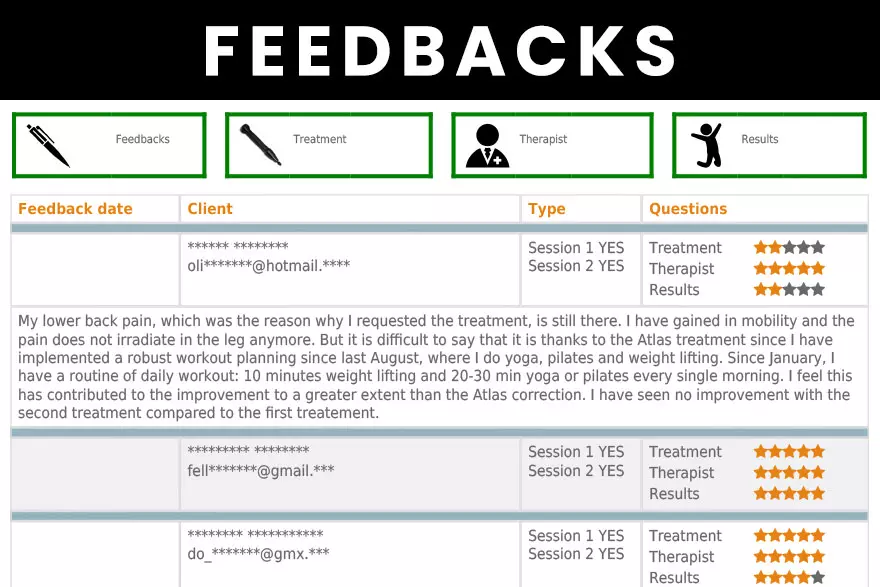
Beware of those who disguise a simple cervical manipulation as Atlas realignment and those who offer low-quality imitations of our method. The results speak for themselves: over 11,000 testimonials and reviews in various languages make us unique. Click to discover opinions, ratings, and authentic experiences shared by those who have experienced Atlas correction with Vibro-Resonance AtlantoMed: